 Skip to content

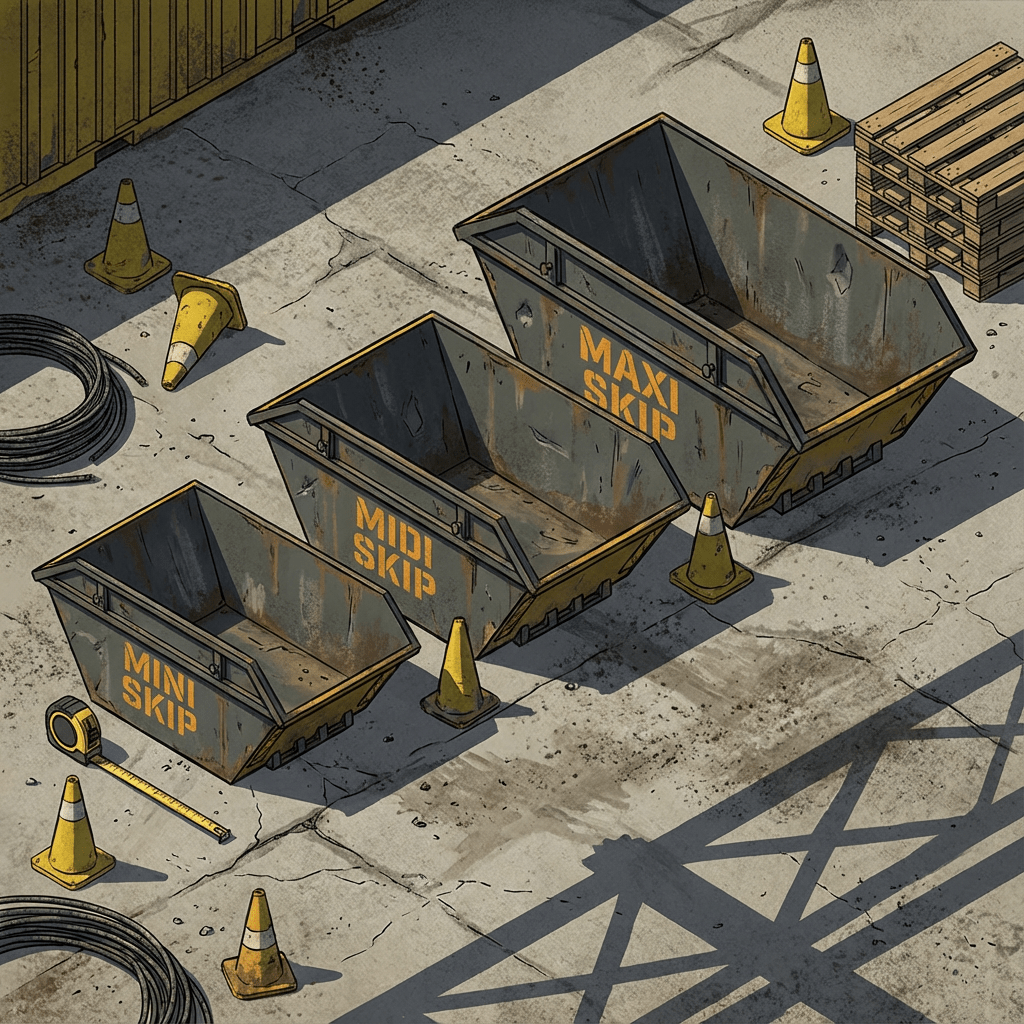
Why Choosing the Right Skip Size Matters
Getting the skip size wrong can be a costly mistake that many residents and businesses make when tackling waste disposal projects. Order a skip that’s too small, and you’ll face the frustration of overflowing waste and potential additional collection fees. Go too large, and you’re paying for capacity you don’t need whilst taking up unnecessary space on your property.
Whether you’re undertaking a kitchen renovation, clearing out your garden, or managing a commercial construction project, selecting the appropriate skip size from the outset ensures cost-effectiveness, compliance with local regulations, and project efficiency.
Key considerations include:
- Understanding skip size measurements and capacity
- Project-specific size recommendations
- Site access and placement requirements
- Weight restrictions and prohibited items
- Cost-effectiveness and environmental impact
Understanding Skip Size Basics
How Skip Sizes Are Measured
Skip sizes are measured in two primary ways: by volume (cubic metres) and by weight capacity (tonnes). Understanding this dual measurement system is crucial for making the right choice. A Mini skip can hold approximately 30 – 35 black bin bags worth of waste, whilst a larger Midi skip accommodates around 65 – 70 black bin bags.
The tonne measurement refers to the maximum weight the skip can legally carry on UK roads, whilst cubic metres indicate the physical volume of waste the skip can contain. This distinction matters because dense materials like soil or concrete will reach weight limits before filling the skip’s volume, whereas lighter materials like cardboard or garden waste may fill the volume before reaching weight capacity.
Common Skip Size Categories
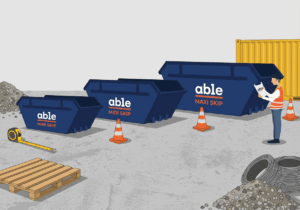
Mini Skips (2-yard): These compact options are perfect for small household projects. A typical mini skip measures approximately 0.78m high, 1.83m long, and 1.30m wide, making it suitable for bathroom refurbishments, small garden clearances, or decluttering projects that generate 30-35 black bags worth of waste.
Midi Skips (4-yard): The most popular choice for medium-sized projects, a standard 4-yard skip can accommodate 65-70 black bags of waste. These skips typically measure 0.78m high, 1.26m long, and 1.75m wide, making them ideal for kitchen renovations, garage clearouts, or moderate landscaping projects.
Maxi Skips (8-yard): For major undertakings, these large-capacity skips can handle substantial waste volumes. An 8M skip is ideal for renovations, large-scale garden makeovers, or commercial projects generating significant waste streams.
Skip Size by Project Type
Home Renovation Projects
Bathroom Renovations typically generate 1.5-3 cubic metres of waste, including old fixtures, tiles, and packaging from new installations. A 2-3m³ mini skip is usually sufficient, accommodating the removal of a standard bathroom suite, tiling, and associated renovation debris whilst fitting comfortably in most driveways.
Kitchen Renovations produce considerably more waste due to the removal of cabinets, appliances, worktops, and flooring. These projects typically require a 4-6 m³ midi skip to handle 65-80 black bags’ worth of waste, including bulky items like old kitchen units and white goods (where permitted by your skip hire company).
Full House Renovations require the largest capacity skips (8-12 m³) due to the substantial volume of materials removed. These comprehensive projects can generate waste from multiple rooms, structural changes, and complete interior replacements, often requiring 80+ black bags worth of disposal capacity.
Garden and Landscaping Projects
Garden Clearances vary significantly in waste volume depending on the garden size and vegetation density. A small garden clearance might only need a 2m³ mini skip for basic pruning and leaf removal, whilst larger properties with established trees, shrubs, and hardscaping removal could require 6-8m³ capacity.
Landscaping Projects involving soil excavation, patio installation, or decking removal typically need capacity calculations based on excavated volume. For soil removal, multiply the excavation area (length × width × depth) by 1.3 to account for soil expansion and packing inefficiency.
Commercial and Construction Projects
Small commercial projects, such as office clearances or small construction jobs, typically require 4-6 m³ skips. Large commercial projects involving extensive construction, demolition, or site clearance may require multiple skips or the largest available sizes (8-12 m³) to handle the substantial waste volumes efficiently.
Visual Skip Size Comparison
Understanding Physical Footprint
Visual size guides are essential for ensuring your chosen skip fits your available space whilst meeting capacity requirements. A 4m³ skip, measuring 1.8m in length and 1.22m in width, fits comfortably on most residential driveways without blocking access. In contrast, a 12m³ skip at 3.7m long and 1.78m wide requires significantly more space and careful placement consideration.
Height and Loading Accessibility
Skip height affects both loading convenience and site access. Lower skips (0.78m high) are easier to load manually but offer less volume, whilst taller skips (1.02m+) maximise capacity but may require more effort for waste disposal. Consider whether you’ll be loading the skip manually or using machinery when evaluating height requirements.
Comparing Capacity to Familiar Objects
To better visualise capacity, use familiar reference points: a 3m³ skip holds approximately 12 wheelie bins, equivalent to a small car’s boot space filled 15-20 times. A 6m³ skip doubles this capacity to 24 wheelie bins, roughly equivalent to filling a small van 4-5 times.
Practical Capacity Calculation Methods
The Wheelie Bin Method
Count your expected black bags and divide by the bag capacity for each skip size. A 2m³ skip accommodates 30-35 bags, a 4m³ skip holds 65-70 bags, and an 8m³ skip manages 80+ bags. This method works well for general household and office waste, where bag counting is straightforward.
Volume Calculation for Excavation Projects
For construction or landscaping involving soil removal, calculate the excavation volume (length × width × depth in metres), then multiply by 1.3 to account for soil expansion and packing inefficiency. This factor is crucial because compacted soil in the ground expands when excavated, requiring more skip capacity than the original hole size might suggest.
Weight vs. Volume Considerations
Dense materials like concrete, soil, or rubble reach weight limits before filling the skip volume, whilst lighter materials like packaging, garden waste, or household items typically fill the volume before reaching weight capacity. Mix different waste types strategically – place heavy materials in the bottom and lighter items on top to maximise both weight and volume efficiency.
Online Skip Size Calculators
Many skip hire companies offer online calculators that factor in waste type, project scope, and volume estimates. These tools help refine your size selection by accounting for material density, project duration, and local regulations.
Important Considerations Beyond Size
Site Access and Placement
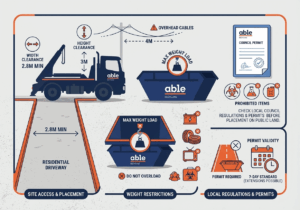
Evaluate your property access for skip delivery and collection. Standard skip lorries require adequate width, height clearance, and turning space. Consider overhead cables, narrow driveways, and parking restrictions that might affect skip placement. Some locations may require permits for road placement, which your skip hire company can typically arrange.
Weight Restrictions and Prohibited Items
Understanding weight limits prevents overloading charges and ensures compliance with road safety regulations. Skips have maximum weight capacities that vary by size, and exceeding these limits may result in additional fees or refusal of collection. Additionally, certain items, such as batteries, electrical appliances, hazardous materials, and tyres, are typically prohibited and require separate disposal arrangements.
Local Regulations and Permits
If your skip cannot be placed entirely on private property, you’ll likely need a permit from your local council for road placement. Permit requirements, costs, and processing times vary by location, so factor this into your project timeline and budget. Your skip hire company should advise on permit requirements and can often handle the application process.
Making Your Final Decision
Creating Your Skip Size Action Plan
Start by categorising your waste into types (general household, garden waste, construction debris) and estimating volumes using the methods outlined above. Cross-reference your volume estimate with visual size guides to ensure the skip fits your space requirements. Factor in project duration – longer projects might benefit from slightly larger skips to accommodate unexpected waste generation.
When to Size Up vs. Size Down
Size up if you’re uncertain about waste volume, working on older properties where unexpected waste often emerges, or managing projects with variable timelines where waste might accumulate gradually. Size down only when you’re confident about waste volumes and have alternative disposal options for any overflow. The cost difference between skip size options is often minimal compared to the inconvenience of insufficient capacity.
Professional Guidance and Support
Reputable skip hire companies offer expert guidance based on extensive experience with similar projects. When consulting with providers about the size of skip you need, describe your project scope, timeline, and waste types to receive tailored recommendations. Professional advice helps avoid common sizing mistakes and ensures you select the most cost-effective option for your specific requirements.
Frequently Asked Questions
Q: How much does it cost to upgrade to a larger skip size? A: The cost difference between skip sizes is typically £20-50, which is often less than the fees for overfilling or requiring a second collection.
Q: Can I change my skip size after booking? A: Most companies allow size changes with sufficient notice (usually 24-48 hours), though availability may affect your collection date.
Q: What happens if I overfill my skip? A: Overfilled skips cannot be collected safely and legally. You’ll need to remove excess waste before collection, often incurring additional charges.
Q: How long can I keep a skip on site? A: Standard hire periods range from 1-2 weeks, with extensions available for additional fees. Road permits typically allow 2-week placement periods.
Q: Do I need a permit if the skip goes on my driveway? A: No permit is required if the skip remains entirely on private property. Permits are only needed for road placement or if any part overhangs public areas.
Conclusion
Choosing the right skip size requires balancing waste volume, site constraints, project timeline, and budget considerations. By understanding size measurements, matching capacity to project type, using visual comparisons, calculating volumes accurately, and considering practical factors, you’ll make an informed decision that serves your project efficiently.
Professional skip hire companies have extensive experience helping customers select the appropriate size for various projects. Don’t hesitate to discuss your specific requirements with providers who can offer tailored advice based on your project scope, waste types, and site conditions.
The small investment of time spent sizing your skip appropriately prevents the larger costs and complications associated with insufficient capacity or excessive size. Whether you’re tackling a modest bathroom renovation or managing a comprehensive property development, understanding the different skip sizes supports project success and ensures responsible waste management.
Book Your Skip Hire below or Call 01772 622342
Delivering Skips throughout Lancashire
We are now able to offer a larger coverage area for our services as we have established links with partner companies within the County who share our ethos of Reliable Service, Affordability and a proactive approach to Recycling. Please visit the Delivery Areas section of the site and use the Map to see if we can service your Location and obtain a quotation.
We deliver to:
Adlington, Blackburn, Chorley, Leyland, South Ribble, Preston, Bolton, Lostock, Wigan, Fylde and Southport