 Skip to content

Southport Skip Hire: What Items Can’t Go in Your Skip
Getting rid of waste through skip hire seems straightforward until that skip full of old paint tins and a broken fridge could land residents in hot water with both skip hire companies and environmental authorities.
Understanding skip hire restrictions isn’t just about avoiding extra charges; it’s about legal compliance, environmental protection, and public safety. Many Southport residents unknowingly attempt to dispose of prohibited items, leading to rejected collections and potential legal issues.
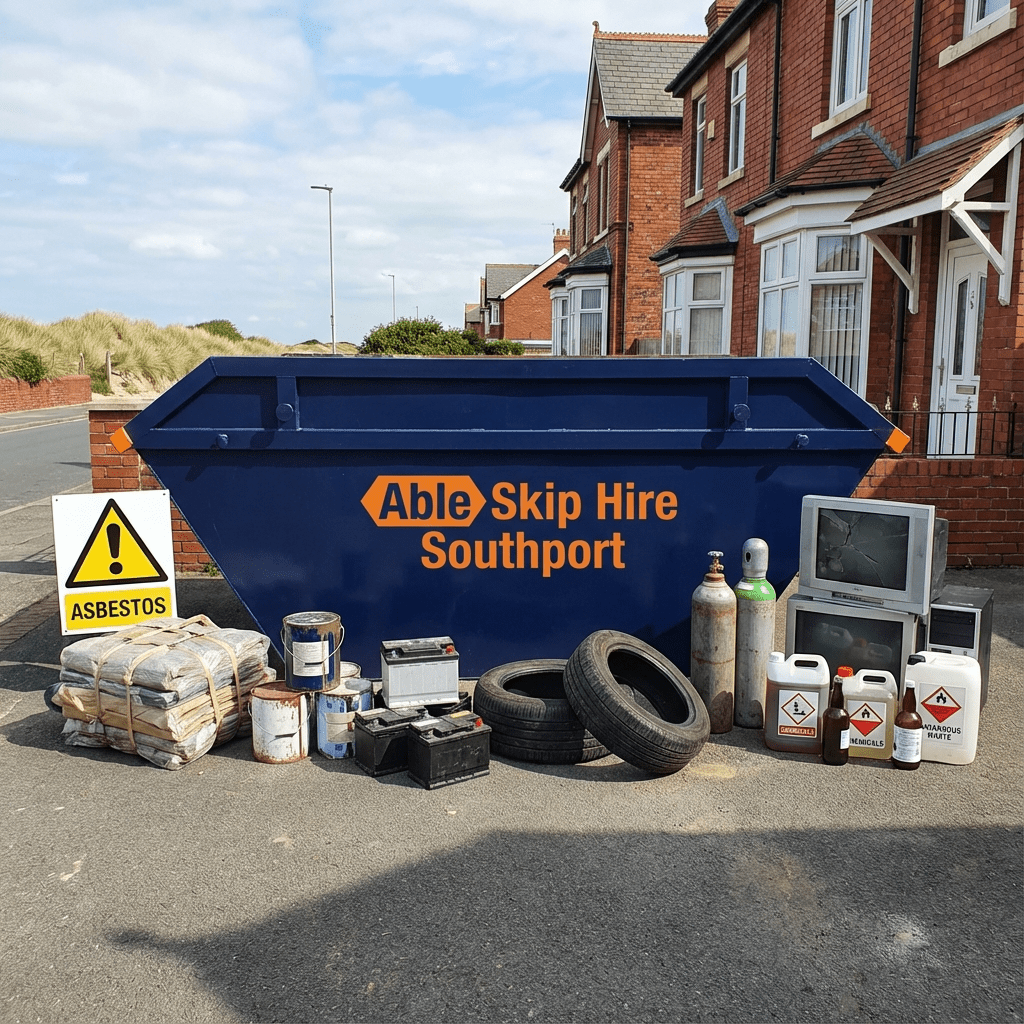
Items are prohibited based on three key factors: safety hazards to workers and the public, environmental protection requirements, and legal compliance with UK waste management regulations, including WEEE directives.
This comprehensive guide covers the most commonly prohibited items in Southport skip hire, explains why these restrictions exist, and provides practical alternatives for the proper disposal of restricted materials.

1. Asbestos and Asbestos-Containing Materials
Any material containing asbestos fibres poses severe health risks, including mesothelioma and lung cancer, when fibres become airborne during handling or transport. This includes pipe insulation, roof tiles, and building panels commonly found in properties built before 1980.
Microscopic fibres remain airborne for hours, and there is no safe level of exposure. Asbestos requires specialist removal techniques and disposal facilities, in accordance with the Control of Asbestos Regulations.
Southport skip hire companies unanimously refuse asbestos due to potential £20,000 fines and serious health liability issues. Licensed asbestos removal contractors charge £200-500+ for safe disposal, but this protects health and ensures legal compliance.
2. Electrical Items and WEEE Waste
All electrical and electronic equipment falls under WEEE regulations, requiring specialist recycling to recover valuable materials and prevent hazardous substances from entering landfills. This covers fridges, freezers, televisions, computers, and small appliances.
These items contain precious metals that require specialist recovery and may contain hazardous substances such as mercury or lead. Computers and phones require data destruction, whilst recycling facilities extract up to 95% of materials.
Fridges and freezers contain refrigerant gases that must be professionally extracted—illegal disposal can result in fines of up to £5,000. Many retailers offer free collection when purchasing replacements, and Sefton Council provides regular WEEE collection services.
3. Hazardous Chemicals and Substances
Paints, solvents, pesticides, cleaning chemicals, and motor oils pose chemical contamination risks to other waste streams and present potential fire hazards, and require strict environmental protection compliance.
These substances pose risks of toxic fumes during transport and processing, potential contamination of recyclable materials, and fire and explosion hazards when mixed with other substances. Groundwater contamination occurs if improperly disposed.
Even dried paint tins often contain residue that can contaminate entire skip loads, making other materials unsuitable for recycling. Sefton Council runs quarterly hazardous waste collection events, and many DIY stores accept old paint for proper disposal.
4. Pressurised Containers and Gas Cylinders
Gas bottles, aerosol cans, fire extinguishers, and any pressurised containers create explosion risks during transport or processing, particularly if containers are damaged or exposed to heat.
Explosion risk increases with handling and compaction, and containers may contain flammable or toxic gases. It’s difficult to verify if containers are empty, and specialised depressurisation is required.
Empty aerosol cans can still contain propellant gases that create serious explosion risks in waste processing facilities. Many gas suppliers operate bottle exchange programmes, and scrap metal dealers often accept depressurised cylinders.
5. Medical and Clinical Waste
Prescription medications, syringes, medical equipment, and healthcare or veterinary waste require infection control measures, drug safety protocols, and specialised incineration in accordance with clinical waste regulations.
These materials pose potential biohazard and infection risks, pharmaceutical contamination concerns, and require high-temperature incineration with strict chain-of-custody documentation.
Unused medications returned to pharmacies prevent accidental poisoning and reduce environmental contamination with pharmaceuticals. Most Southport pharmacies participate in medication return schemes, whilst veterinary practices must use licensed clinical waste services.
6. Batteries (All Types)
Car batteries, household batteries, rechargeable batteries, and any battery-powered device batteries contain heavy metals and corrosive acids that pose environmental contamination risks and require specialist recycling.
Lead-acid batteries contain highly corrosive sulfuric acid, whilst lithium batteries pose fire risks if damaged. Heavy metals require specialist processing, though valuable materials can be recovered through proper recycling.
A single car battery contains enough lead and acid to contaminate 25,000 litres of water if improperly disposed of. Most retailers selling batteries provide free recycling, and Sefton household waste centres accept all battery types.
7. Tyres and Large Rubber Items
Car tyres, motorcycle tyres, and large rubber products cannot be easily processed through standard waste streams. Tyres don’t break down in landfill, create fire hazards, and require specialist processing for rubber recovery.
These items have extremely slow decomposition rates (500+ years), pose fire risks in waste processing facilities, and require specialist shredding for recycling. However, they offer significant potential for rubber and steel recovery.
Tyre fires can burn for months and release toxic chemicals, but proper recycling converts tyres into valuable crumb rubber for road surfaces. Many tyre retailers accept old tyres when fitting new ones.
8. Liquids and Wet Waste
Any liquid waste, including water, oils, liquid food waste, and materials with high fluid content, complicates waste processing, creates hygiene issues, and may leak during transport, causing environmental damage.
Liquids pose leakage risks during transport and handling, contaminate other recyclable materials, create weight distribution issues in skips, and potentially create hazardous conditions.
Liquid waste can double the skip weight, making collection dangerous and potentially exceeding vehicle weight limits. Wet concrete or plaster should be allowed to set, whilst oils require specialist liquid waste collection services.
9. Large Appliances (White Goods)
Washing machines, dishwashers, tumble dryers, and other large domestic appliances face size constraints in standard skips, specialist recycling requirements, and potential issues with refrigerants or hazardous components.
These appliances require dismantling for proper material recovery and may contain motors with valuable copper. Specialist transport is often needed due to size and weight, and some contain refrigerants requiring professional extraction.
Large appliances contain up to 75% recyclable materials, including valuable metals, but require specialist processing facilities. Sefton Council charges £25 per item for bulky waste collection, and many appliance retailers offer free collection services.
10. Contaminated or Infectious Materials
Materials contaminated with bodily fluids, chemicals, or potentially infectious substances pose health and safety risks to waste handlers, potentially transmit disease, and require specialised cleaning or disposal.
These materials pose potential risks of pathogen transmission, require specialist personal protective equipment, may require incineration rather than standard processing, and require strict handling and transport protocols.
Even materials contaminated during flood damage may require specialist disposal due to potential bacterial contamination. Professional cleaning companies often handle contaminated waste disposal, whilst emergency services can advise on protocols for infectious materials.
Planning Safe Waste Disposal
Skip hire restrictions in Southport protect public health, environmental safety, and ensure legal compliance—covering everything from deadly asbestos to everyday batteries. When in doubt, contact skip hire providers before loading questionable items.
Most restrictions are in place for genuine safety reasons, and alternative disposal options are readily available throughout Southport. Carefully planning waste disposal by separating prohibited items in advance helps avoid issues.
Proper disposal through appropriate channels often costs less than dealing with rejected skip collections and potential legal issues. UK households generate over 30 million tonnes of waste annually, with 10-15% requiring specialist disposal.
Quick Reference for Prohibited Items
High-Risk Materials: Asbestos, chemicals, pressurised containers, and medical waste require immediate specialist attention. Regulated Items: Electronics, batteries, tyres, and large appliances are covered by specific recycling legislation. Operational Restrictions: Liquids and contaminated materials face logistical and safety-based prohibitions
Improper hazardous waste disposal fines range from £300 to £50,000, depending on severity. Proper WEEE recycling recovers up to 95% of materials, preventing 2.3 million tonnes of CO2 emissions annually.
Book Your Skip Hire below or Call 01772 622342
Delivering Skips throughout Lancashire
We are now able to offer a larger coverage area for our services as we have established links with partner companies within the County who share our ethos of Reliable Service, Affordability and a proactive approach to Recycling. Please visit the Delivery Areas section of the site and use the Map to see if we can service your Location and obtain a quotation.
We deliver to:
Adlington, Blackburn, Chorley, Leyland, South Ribble, Preston, Bolton, Lostock, Wigan, Fylde & Southport