 Skip to content

12 Common Skip Hire Mistakes That Cost You Money
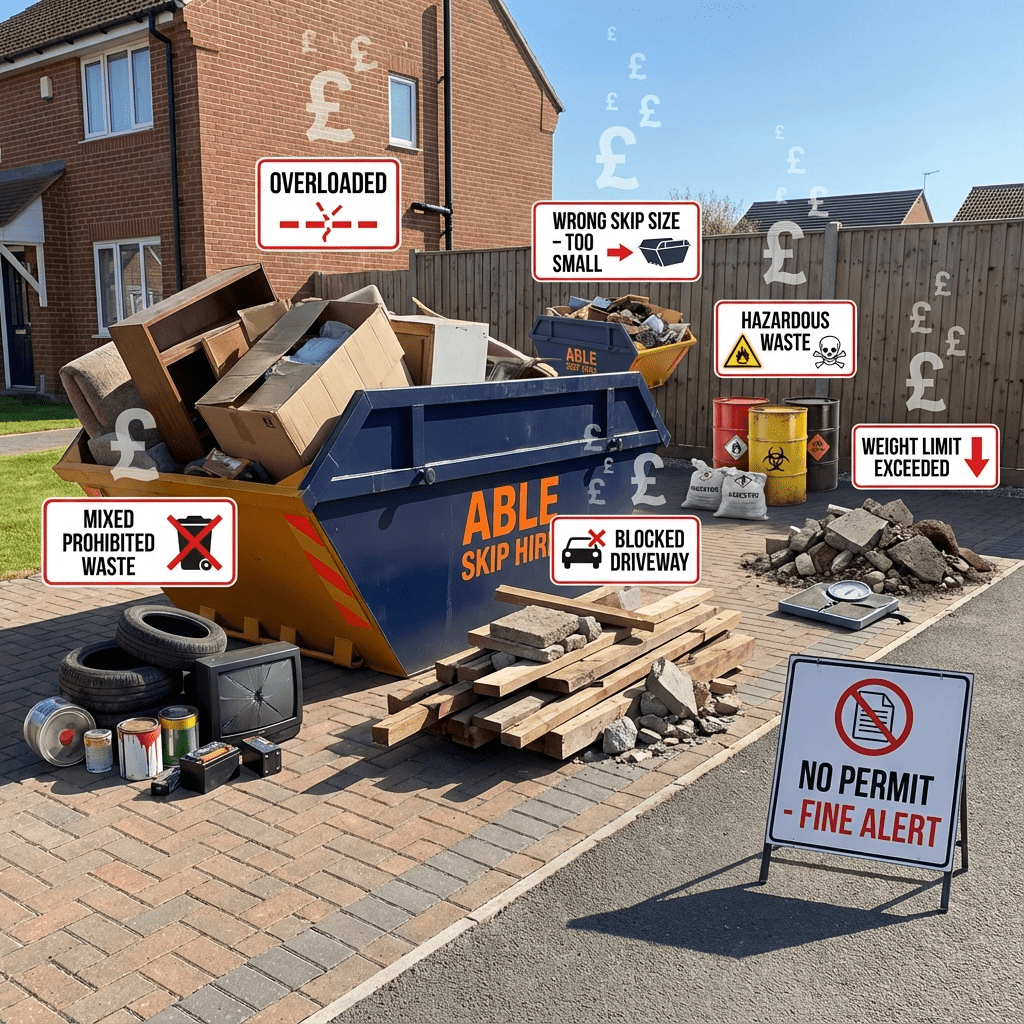
Every year, homeowners and businesses across Lancashire waste thousands of pounds on skip hire mistakes that could have been easily avoided with the proper knowledge. Skip hire seems straightforward, but minor oversights can quickly double waste disposal costs, trigger hefty fines, or leave you scrambling for last-minute solutions.
These costly errors impact everyone from first-time DIY enthusiasts to experienced contractors. The following 12 mistakes have been identified through industry experience and represent the most financially damaging errors made during skip hire projects. From choosing the wrong skip size to failing to meet permit requirements, these costly pitfalls can derail project budgets and timelines.
1. Choosing the Wrong Skip Size
Selecting a skip that’s too small forces multiple expensive hires, whilst choosing one that’s too large means paying for unused space. Size miscalculation is the most common and costly skip-hire mistake, potentially doubling waste-disposal costs.
Getting the size right saves up to £150 by avoiding second skip hires. Projects requiring 4 cubic yards of waste space often see homeowners hire a 2-yard mini skip, paying approximately £300 for two hires instead of £240 for one midi skip.
Volume estimation techniques help prevent this costly error. A mini skip holds roughly 30-35 black bags, whilst a midi skip accommodates 65-70 bags. Measure waste volume before booking by stacking rubbish bags and calculating the space required.
2. Not Checking or Obtaining Skip Hire Permits
Placing skips on public roads or pavements without the proper permits attracts council fines and may result in the skip being removed. Lancashire councils actively monitor unpermitted skips, with violations attracting fines of £50-£1,000, plus additional removal and rebooking costs.
Proper permits avoid hefty council fines and prevent forced skip removal mid-project. Anyone planning to place skips on public highways, pavements, or council-owned land must obtain permission from the local authority.
Permit applications typically take 3-5 working days to process. Reputable skip companies often handle permit applications on behalf of customers, ensuring compliance with local Lancashire council regulations and preventing costly violations.
3. Overfilling the Skip Beyond Safe Limits
Loading waste above the designated fill line creates safety hazards and triggers costly surcharges from skip companies. Overfilling penalties range from £50-£150, plus potential labour costs for removing excess waste before collection.
Skip companies routinely charge surcharges for overfilled skips, and drivers may refuse to collect entirely if the load appears unsafe. This creates expensive project delays and forces emergency waste removal arrangements.
Proper loading techniques maximise space legally by breaking down bulky items and distributing weight evenly. Strategic loading ensures safe transport whilst avoiding surcharge fees and collection refusal.
4. Disposing of Prohibited or Hazardous Waste
Certain materials, such as asbestos, chemicals, batteries, and electrical appliances, require specialist disposal and can contaminate entire skip loads. Hazardous waste disposal fees range from £50 to £500 per item, and contaminated skips may be rejected entirely.
A single car battery in a general waste skip can trigger a £50 contamination fee. Asbestos requires specialist removal, which can cost hundreds of pounds, making proper waste separation essential for budget control.
Every day, prohibited items include paint tins, fluorescent bulbs, medical waste, and pressurised containers. Renovation projects involving old buildings require particular attention to potential hazardous materials that demand specialist disposal routes.
5. Not Comparing Prices and Services
Accepting the cheapest quote without examining service quality often leads to hidden fees and poor customer support. These charges can increase initial quotes by 30-50%, turning a £200 quote into £300 or more through undisclosed costs.
Initial quotes frequently exclude permit fees, delivery charges, or weight surcharges. Poor service quality causes costly project delays due to unreliable collection schedules and inadequate customer support.
Itemised quotes help identify hidden charges before committing to providers. Check company credentials, evaluate service reviews, and verify that quotes include all necessary fees for transparent pricing comparisons.
6. Making Last-Minute Bookings
Booking skips at short notice results in limited availability and premium pricing. Peak construction seasons and bank holiday periods often see 20-30% price increases for urgent bookings, plus limited availability of larger sizes.
Urgent bookings force customers to accept unsuitable skip sizes or inconvenient delivery slots. This compromises project planning and may require expensive alternative arrangements when preferred options are unavailable.
Planning secures preferred skip sizes and delivery times at standard pricing. Book at least 1 week in advance during busy periods, such as spring and summer, when demand across Lancashire peaks.
7. Hiring for Too Long or Too Short a Time
Misjudging project duration leads to unnecessary extension fees or rushed waste disposal that compromises project quality. Daily extension fees of £10-£25 accumulate rapidly, with a week-long extension at £15 per day adding £105 to skip hire costs.
A £240 midi skip can increase to £345 through extension fees when project timelines are underestimated. Conversely, insufficient hiring periods lead to costly workflow disruptions and rushed completion schedules.
Realistic scheduling considers project complexity and potential delays. Complex renovation projects with multiple phases require flexible hire periods to accommodate unpredictable timelines without triggering expensive extensions.
8. Poor Skip Placement and Access Planning
Inadequate delivery planning results in repositioning fees, property damage, or collection failures, disrupting project schedules. Skip lorries require 9-foot clearance width, and repositioning due to poor initial placement typically costs £75-£150.
Heavy skip lorries can damage driveways and access routes, resulting in repair costs that exceed the cost of skip hire. Poor placement also restricts loading access throughout the hire period, hampering project efficiency.
Access route planning prevents positioning problems and delivery failures. Protect surfaces with boards or matting, ensure adequate clearance for collection vehicles, and communicate specific placement requirements with delivery drivers.
9. Not Verifying Waste Carrier Licences
Using unlicensed waste carriers risks illegal dumping charges and potential legal liability for improper waste disposal. Environment Agency prosecutions of unlawful waste disposal can result in fines up to £5,000, plus possible criminal charges for serious violations.
Customers face liability for fly-tipping by unlicensed carriers, even when they believed the disposal was legitimate. This creates significant legal and financial exposure that far exceeds skip hire costs.
Waste carrier registration verification through the Environment Agency database ensures legal protection. Licensed carriers guarantee proper waste processing and recycling whilst providing environmental compliance and peace of mind.
10. Mixing Incompatible Waste Types
Combining recyclable materials with general waste or hazardous substances triggers expensive sorting fees and processing surcharges. Contaminated loads incur sorting fees of £50-£200, whilst mixed waste prevents efficient recycling that could reduce overall costs.
A skip containing both general waste and recyclable materials may trigger £100+ sorting fees. Proper separation could qualify for recycling discounts, making waste categorisation financially beneficial.
Waste separation techniques avoid contamination penalties and support environmental compliance objectives. Commercial clearances and mixed renovation projects require particular attention to diverse waste streams and proper categorisation methods.
11. Ignoring Weight Limits for Dense Materials
Heavy materials like soil, bricks, and concrete can exceed skip weight limits even when containers appear only partially complete. A 4-yard skip filled with soil can easily exceed weight limits, even when it seems half-full, triggering surcharges or collection refusal.
Weight limit violations result in costly alternative disposal arrangements when standard collection is no longer possible. Different skip sizes have specific weight capacities that must be respected regardless of volume.
Dense material handling requires appropriate skip sizing and disposal planning. Construction projects and garden clearances involving rubble, soil, or masonry need specialised approaches to avoid weight-related complications and surcharges.
12. Leaving the Skip Unsecured
Unsecured skips in public areas attract illegal dumping, potentially triggering contamination fees and hazardous material charges. Contamination from unauthorised dumping can trigger sorting fees and hazardous material charges, for which customers remain legally responsible.
Even though others cause the contamination, skip hirers face liability for all contents at the time of collection. This creates unexpected costs and potential compliance violations through no fault of the original customer.
Security measures such as covers and tarps prevent unauthorised access and dumping. Skips placed on public highways or accessible locations require monitoring strategies and potentially lockable options to maintain content control throughout the hire period.
Key Prevention Strategies
These 12 skip hire mistakes collectively cost Lancashire residents and businesses thousands of pounds annually through avoidable fees, fines, and project disruptions. Focus first on the highest-cost errors, such as size selection and permit requirements, then implement planning and safety measures to prevent lower-cost but cumulative expenses.
Partner with experienced, licensed skip hire companies who guide proper sizing, permit requirements, and waste disposal compliance. Professional operators help customers avoid these costly mistakes entirely through expert knowledge and comprehensive service packages.
When starting any project involving waste disposal, consult our skip size guide to ensure accurate sizing from the outset. Additionally, familiarise yourself with proper loading methods to avoid overfilling penalties. Understanding common skip hire mistakes helps prevent many of these expensive errors from occurring.
| Mistake | Typical Cost | Prevention | Best For |
|---|---|---|---|
| Wrong size | £150+ extra | Measure waste volume | All projects |
| No permits | £50-£1,000 fines | Check council requirements | Public placement |
| Overfilling | £50-£150 surcharge | Respect fill lines | Heavy waste loads |
| Prohibited waste | £50-£500 per item | Know disposal rules | Renovations |
Book Your Skip Hire below or Call 01772 622342
Delivering Skips throughout Lancashire
We are now able to offer a larger coverage area for our services as we have established links with partner companies within the County who share our ethos of Reliable Service, Affordability and a proactive approach to Recycling. Please visit the Delivery Areas section of the site and use the Map to see if we can service your Location and obtain a quotation.
We deliver to:
Adlington, Blackburn, Chorley, Leyland, South Ribble, Preston, Bolton, Lostock, Wigan, Fylde and Southport