 Skip to content

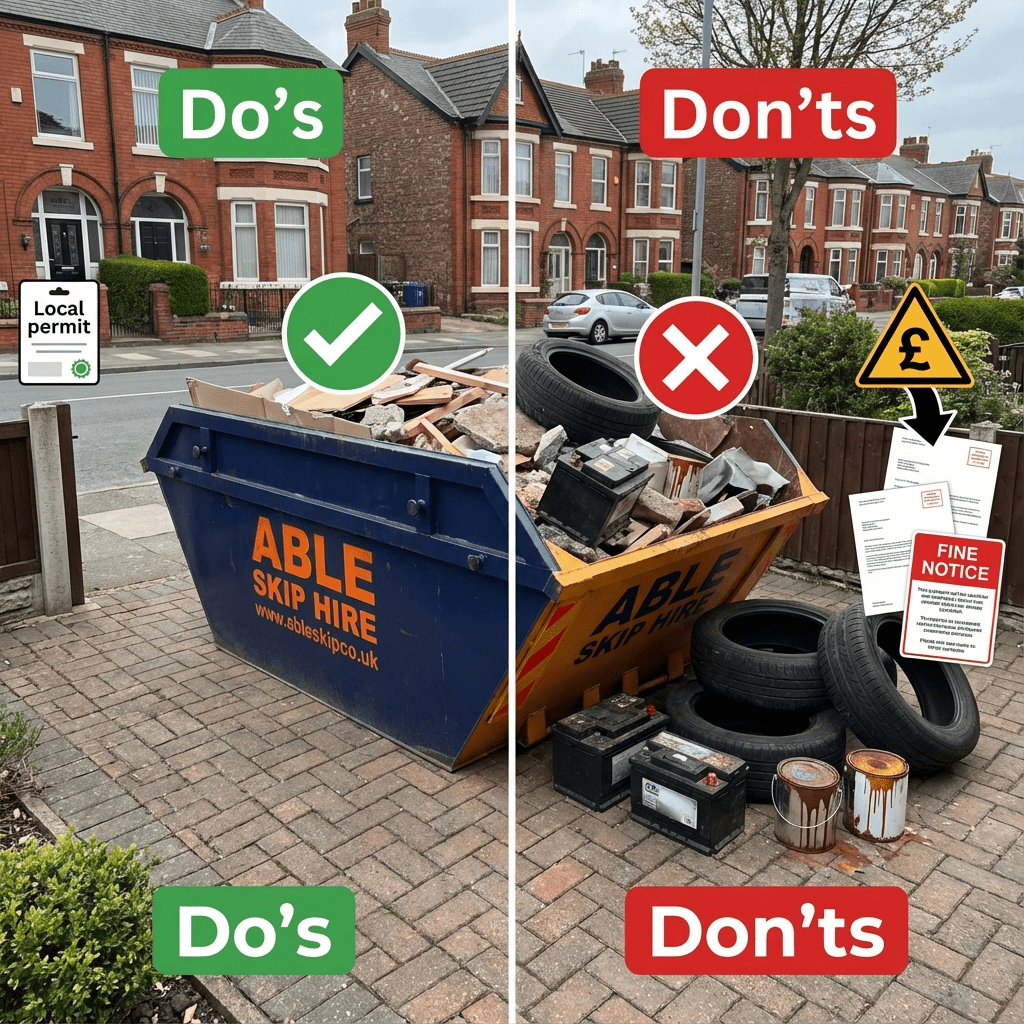
Hiring a skip in Southport should be simple. You book it, it arrives, you fill it, it gets taken away. In reality, skips come with a few clear rules, and if you miss them, you can end up with fines, delays, or the skip being removed before you are finished with it.
This guide sets out the practical do and do not rules of Southport skip hire in 2026. It is written for:
- Homeowners and DIYers planning a clear out, renovation, or garden tidy
- Builders and trades who need skips on the road or on site
- Landlords and property managers dealing with regular turnarounds
- First-time skip users who are unsure what is allowed
Most problems start before the skip even arrives.
In Southport, there are rules about:
- Where can you put a skip
- When you need a council permit
- What you can and cannot put in it
These are not there to make life awkward. They protect other road users, keep pavements clear, and make sure waste is handled safely. If you ignore them, the usual consequences are wasted money, project delays, and a lot of avoidable stress.
Common headaches we see include:
- Skips booked for the road with no permit in place, which leads to last-minute changes or cancelled deliveries
- Skips blocking driveways, paths, or parking because the position was not planned properly
- Restricted items hidden in the load, which leads to extra charges or the skip not being taken away
If you are unsure where to start, a quick look at local Southport skip hire information and the different skip sizes can give you a feel for what you need.
This blog breaks everything down into simple Do and Do not rules. Each point follows a clear pattern: what to do, why it matters, what happens if you ignore it. Follow these, and you can hire a skip in Southport with confidence, whether it is your first time or your fiftieth.
Do: Obtain the Necessary Permits Before Placing a Skip
If you want a skip on the road in Southport, you need a permit from the local council. This applies whether you are a homeowner, a landlord, or a builder. The permit is what makes the skip legal on public land.
When you need a permit
You need a permit if the skip goes on:
- The road outside your house or site
- A public parking bay or layby
- Any other public highway space used by traffic
You usually do not need a permit if the skip is placed on:
- Your own driveway
- Private land you control, with the landowner’s consent
- A work site that is fully off the public highway
If you are unsure which side of the line your planned spot falls on, ask first. Do not guess.
Why the permit matters
The permit is not just a bit of paperwork. It confirms that:
- The skip will not block visibility at junctions or crossings
- There is room for traffic, pushchairs, and emergency vehicles
- The skip will have lights and markings if it needs them
Get the permit sorted before you book your dates.
What happens if you skip the permit
If a skip goes on the road without permission, you risk:
- Fines from the council or enforcement officers
- The skip is being refused delivery or moved to a different spot
- Unplanned delays that push your project back
- Extra costs if the skip has to be removed early
The simplest route is to let a local skip company deal with the permit for you. Many Southport customers use guides like how to get a skip permit in Southport or book their skip and permit together, so everything is in place before delivery.
Do not put a skip on public land until you know the permit is approved. It protects you, your neighbours, and your project budget.
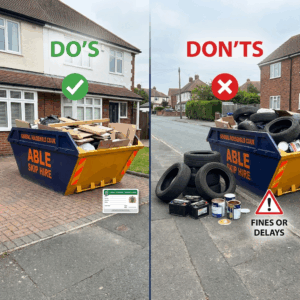
Do not: Place Skips Without Checking Local Restrictions
Before you decide where your skip will sit in Southport, you need to know what is allowed in that exact spot. The rules change depending on whether the skip is on the road, on a pavement, or on private land.
Know where you can and cannot place a skip
On public roads
- Skips must not block junctions, crossings, or narrow roads
- They must leave enough space for traffic and emergency vehicles
- They usually need lights and markings in darker conditions
On pavements and verges
- Skips are rarely allowed on pavements used by pedestrians
- You must not block access for prams, wheelchairs, or mobility scooters
- Placing a skip on a grass verge can lead to damage that you may be billed for
On private driveways and private land
- You need permission from the landowner if it is not your property
- The surface must be strong enough for the skip and the lorry
- You must still respect sight lines for vehicles exiting the property
What happens if you ignore local restrictions
If a skip is placed where it should not be in Southport, you risk:
- Fines for obstructing the highway or footpath
- The council is asking for the skip to be moved or removed at short notice
- Extra charges if the hire has to be cut short or rearranged
- Tension with neighbours if driveways, parking, or pavements are blocked
Guessing the placement is one of the quickest ways to turn a simple job into a headache.
How to check before you book
- Look at where you want the skip and ask yourself if cars, pedestrians, and deliveries can still move freely
- If you plan to use the road, read local guidance, such as rules on placing a skip on the road
- Speak to your skip hire company and describe the exact location, including nearby junctions, corners, or shared drives
- If in doubt, choose private land on your property and pick a suitable size using guides like which skip size you need
Do not place a skip until you are confident it meets local Southport rules. A quick check before delivery is far cheaper and easier than moving a full skip later.
Do: Use Skips for Accepted Waste Only
Once your skip is in place, what you put in it matters just as much as where it sits. Southport skips are for general, non-hazardous waste only. If you stick to accepted waste, your skip will be collected on time and processed safely.
What you can usually put in a skip
Typical acceptable waste includes:
- General household rubbish such as old carpets, non-electrical furniture, toys, packaging, and clutter from clear-outs
Non-food kitchen and bathroom waste, such as units, worktops, tiles, and sanitary ware, once they are removed
- Garden waste such as soil, turf, branches, hedge trimmings, leaves, and small tree cuttings
- DIY and construction wast,e such as bricks, rubble, tiles, plasterboard if agreed in advance, untreated wood, doors, and skirting boards
- Metal items such as radiators, curtain rails, and non-electrical metal fittings
- Plastics and non-hazardous packaging related to your project
If you are planning a bigger job, you can match the waste to the right skip size using guides such as how to choose the right skip size. That keeps loading simple and reduces the risk of overfilling.
Why accepted waste rules matter
There are three main reasons to follow the accepted waste list.
- Environmental care. Skips from Southport go to licensed facilities where much of the load is sorted and recycled. If you keep hazardous items out, more of your waste can be reused instead of heading to the landfill. You can read more about what happens after collection in guides, such as what happens to skip rubbish.
- Legal compliance. Waste sites must follow strict rules. If your skip contains things that should not be there, the whole load can be classed as contaminated, which affects how it can be handled.
- Cost and delays. If the driver spots something that is not allowed, they may refuse collection or ask for it to be removed. If it reaches the depot and fails checks, there can be sorting fees or return charges.
Think of the skip as a container for normal, non-hazardous, solid waste only.
Do use your skip for the right materials and keep anything doubtful out. If you are not sure whether something is accepted, ask your skip provider before it goes in the container. This small check keeps you on the right side of Southport rules and avoids problems on collection day.
Do not: Dispose of Restricted Items in Skips
Not everything can go in a skip in Southport. Some items are classed as hazardous or restricted, and putting them in your skip can cause serious problems for you and for the waste site that receives the load.
What you must keep out of your skip
Common restricted items include:
- Chemicals and liquids such as paint, solvents, oils, fuel, cleaning fluids, and other liquid waste. These can leak, react with other materials, and contaminate soil and water.
- Tyres which need special treatment and do not go through normal skip processing.
- Asbestos in any form. This material needs specialist handling and licensed removal, so it must never be mixed with general waste. For guidance, use resources such as how to deal with asbestos safely.
- Batteries, including car batteries and smaller household batteries. These contain acids and metals that are dangerous in standard waste streams.
- Electrical and electronic items such as fridges, freezers, TVs, monitors, computers, and other plug-in or battery-powered equipment. These are covered by specific recycling rules.
- Gas bottles and pressurised cylinders, even if you think they are empty, because they can explode if damaged or heated.
- Clinical or medical waste, such as sharps, dressings, or medicines, requires specialist disposal routes.
If an item looks hazardous or contains liquids, chemicals, or electrics, treat it as restricted and check before loading.
Why are these items restricted
- Safety risks on site. Hazardous items can leak, ignite, or react with other materials inside the skip or at the waste facility.
- Legal rules on hazardous waste. Waste operators in and around Southport must follow strict regulations about how they accept and process restricted items.
- Environmental protection. Certain materials release toxins if crushed, buried, or burned with general waste.
What can happen if you ignore this rule
- The driver may refuse to collect your skip if they spot restricted items on top.
- The skip can be taken to a holding area and checked, which often leads to sorting fees.
- You may be billed for the safe removal and disposal of the problem items.
- In serious or repeated situations, you can face formal action under local enforcement in Southport.
Do not guess with hazardous or restricted waste. If you are unsure, use guides such as prohibited items for Southport skips or speak to your skip hire provider before you load the container. A quick check keeps your project safe, legal, and on schedule.
Do: Position the Skip Safely and Accessibly
Where you put the skip in Southport makes a big difference to safety, access, and cost. A few minutes of planning can save you from damaged driveways, blocked roads, and extra charges when the lorry cannot reach the container.
Choose a solid, level surface
- Use firm ground. Concrete or tarmac is best for most skips.
- Avoid weak surfaces. Soft tarmac, block paving, grass, and gravel can sink or mark under the weight.
- Protect the area. If you are worried about marks, lay down sturdy boards or sheets before delivery.
If the surface gives way, the skip can tilt or get stuck, which often leads to damage and recovery costs.
Keep it accessible for the lorry
- Make sure the approach is wide enough for the delivery truck to reach the spot safely.
- Check height clearances such as trees, phone cables, garages, and low balconies.
- Leave room in front of the skip so the lorry can lift it straight up when it is time to collect.
- Do not park cars in front of the skip or block it with building materials.
If you are working on a tighter site, it can help to look at guides such as mini, midi, and larger skip sizes and pick a container that fits your space without making access awkward.
Think about daily use and neighbours
- Keep clear access from your door or work area to the skip so you are not carrying waste around obstacles.
- Avoid blocking shared driveways, parking bays, and bin storage areas.
- Make sure you can still open gates, garage doors, and vehicles while the skip is on site.
- If the skip is near a public path, allow room for pushchairs and mobility aids to pass safely.
Why good positioning matters
- Safer loading. A level, stable skip reduces the risk of trips and falling waste.
- Smoother service. Clear access means the driver can deliver and collect without delays or extra visits.
- Lower costs. You avoid charges for failed collections, ground damage, or moving the skip mid-hire.
Do agree on the position with your skip provider before delivery, and be honest about space, surface, and access. A quick chat up front keeps your Southport hire simple, safe, and hassle-free from drop off to collection.
Conclusion: Hire a Skip in Southport with Confidence
Skip hire in Southport does not need to be stressful. If you follow a few clear do and do not rules, you can get your waste gone without falling foul of local rules or unexpected costs.
Key rules to remember
- Do get the right permit if your skip goes on the road or other public land. This keeps your hire legal and avoids fines or last-minute cancellations.
- Do check placement rules for your exact spot. Think about roads, pavements, driveways, and shared access so you do not block neighbours or traffic.
- Do use the skip for accepted waste only. Keep it to normal household, garden, and building waste that can be safely sorted and recycled.
- Position the skip on solid, level ground with clear access for the lorry, and enough space for you to load it safely.
Key rules to avoid trouble
- Do not skip permits when you use public land. If you are unsure, ask your skip provider or check local guidance.
- Do not block pavements, junctions, or driveways. Poor placement is a common cause of complaints and enforcement visits in Southport.
- Do not put restricted or hazardous items in the skip, such as chemicals, asbestos, tyres, batteries, or electricals. These need separate disposal routes.
- Do not hide problem items in the load. They are usually spotted, and that leads to delays, sorting charges, or the skip being refused at collection.
The simple rule is this. Plan where the skip will go, what will go in it, and who needs to approve it.
Practical next steps for Southport customers
- Talk to your skip hire company about permits, placement, and what you plan to throw away. A short call often removes most guesswork.
- Check council rules if you intend to use the road or shared areas, and allow time for permit approval before your project starts.
- Plan your waste so that accepted materials go in the skip, and restricted items are set aside for other services.
- Match the skip size to your space and load with guides such as essential skip sizes for homeowners, or use simple online booking tools like book a skip online in Southport.
If you follow these do and do not rules, you can hire a skip in Southport in 2026 that is legal, tidy, and hassle-free from delivery to collection.
Book Your Skip Hire below or Call 01772 622342
Delivering Skips throughout Lancashire
We are now able to offer a larger coverage area for our services as we have established links with partner companies within the County who share our ethos of Reliable Service, Affordability and a proactive approach to Recycling. Please visit the Delivery Areas section of the site and use the Map to see if we can service your Location and obtain a quotation.
We deliver to:
Adlington, Blackburn, Chorley, Leyland, South Ribble, Preston, Bolton, Lostock, Wigan, Fylde and Southport